
Most ecommerce founders don’t have a product problem.
They have a targeting problem.
You can have a great product, strong branding, and a clean website—and still struggle with conversions. Not because the product is bad, but because you’re showing it to the wrong people, or messaging it the wrong way.
That’s where modern product validation tools for ecommerce come in.
In this post, we’ll walk through:
- Why conversion issues are often targeting issues
- How AI personas reveal hidden mismatches
- A case study using a premium t-shirt from Mack Weldon
- How tools like Simmerce.ai help you identify the right audience and messaging before spending on ads
The Real Problem: Conversion Isn’t Just About the Product
Let’s say you’re selling a $38 premium t-shirt.
Some users will think:
- “This is overpriced.”
Others will think:
- “This looks high quality—I’d buy this.”
Same product. Same page. Completely different reactions.
Why?
Because conversion depends on who sees the product, not just what the product is.
Traditional Product Validation Misses This
Most validation methods focus on:
- “Is this product good?”
- “Does this page convert?”
But they don’t answer:
- “Who does this product convert for?”
- “Why do some users hesitate while others buy instantly?”
That’s the missing layer.
Case Study: A Premium T-Shirt from Mack Weldon
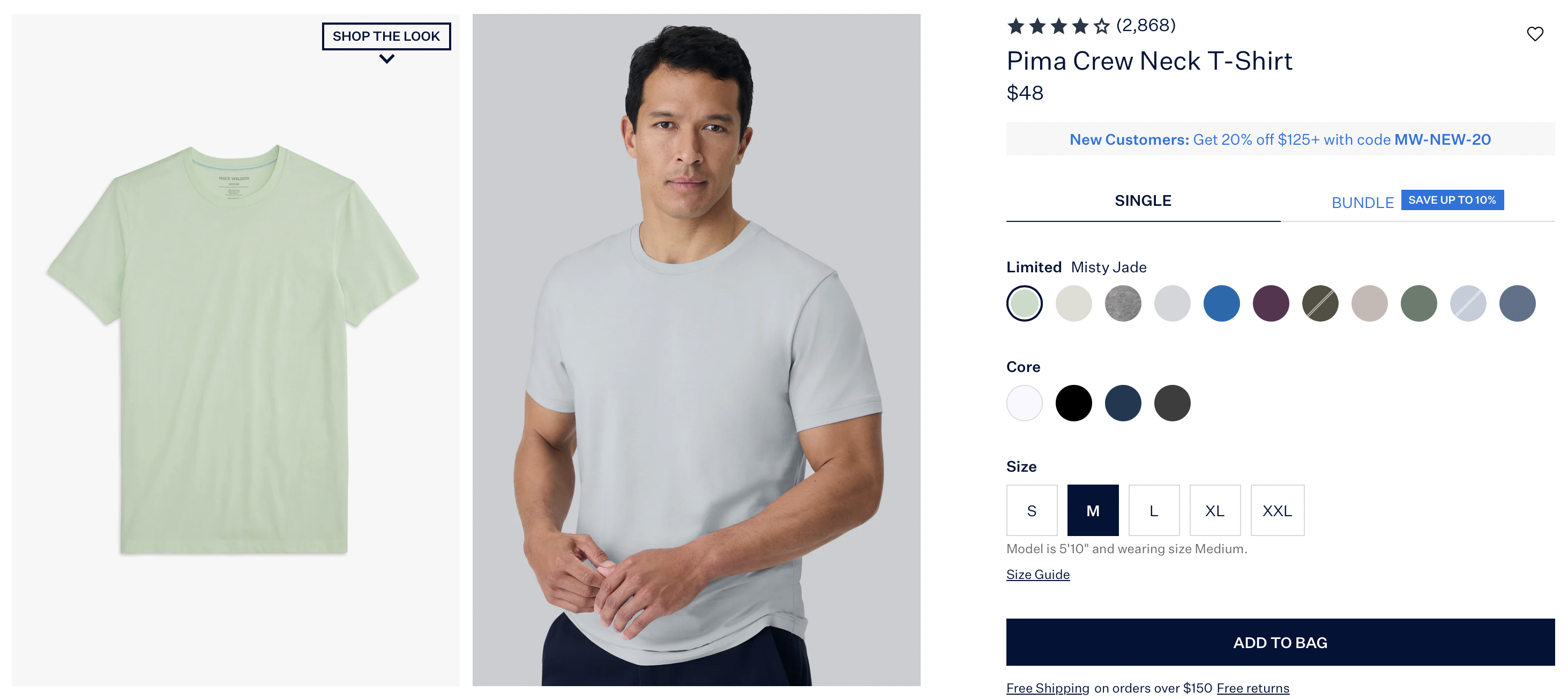
We analyzed a real product from Mack Weldon:
Product: Pima Crew Neck T-Shirt Price: ~$48 Positioning: Premium basics
At first glance, this is a strong product:
- Clean design
- Premium fabric
- Established brand
But the key question isn’t:
❌ “Will this convert?” ✅ “For whom will this convert—and why?”
Step 1: Simulating Customer Behavior with AI Personas
Instead of guessing, we ran a simulation using 10 AI-generated personas representing different types of shoppers:
- Busy Professional
- Impulse Buyer
- Young Trendsetter
- Mobile-First Millennial
- Social Proof Seeker
- Gift Buyer
- Deal Chaser
- Senior Digital Adopter
- First-Time Online Buyer
- Budget Bargain Hunter
Each persona evaluated the product like a real customer—reacting to:
- Price
- Messaging
- Visuals
- Perceived value
Step 2: What the Personas Revealed
1. The Same Product Created Two Opposite Reactions
Busy professional:
The Busy Professional persona is likely to convert due to their premium experience motivation and relatively low price sensitivity, allowing them to appreciate the quality of the Mack Weldon Pima Crew Neck T-Shirt. Their reliance on reviews and brand loyalty aligns with the strong product ratings, enhancing their trust and likelihood to purchase. However, the persona's time-poor lifestyle means they may abandon the cart if the purchase process is not streamlined. To improve conversion for this persona in future tests, consider simplifying the checkout process on mobile to minimize time spent on purchases. Additionally, highlighting time-saving aspects of the product, such as ease of care or versatility, could resonate well. Finally, providing exclusive offers or loyalty rewards for repeat purchases may leverage their brand loyalty effectively.
Budget bargain hunter:
The Budget Bargain Hunter persona is unlikely to convert due to a significant trust barrier, with a low trust score of 37%. This individual is highly price-sensitive and relies heavily on reviews for reassurance, yet the product lacks sufficient credibility signals to instill confidence. Given their frugal lifestyle and desire for value, they are cautious about making purchases without adequate social proof. To improve conversion for this persona, consider enhancing the product page with more customer testimonials and detailed reviews, emphasizing affordability and value. Additionally, offering a limited-time discount or bundle promotion could entice this persona to complete a purchase by appealing to their desire for savings. Lastly, incorporating trust signals such as satisfaction guarantees or easy return policies may help alleviate skepticism and encourage conversion.
👉 Insight: The product itself isn’t the issue—audience fit is.
2. Messaging Wasn’t Targeted Enough
The product page tried to appeal to everyone:
- Style-conscious buyers
- Value shoppers
- Premium customers
But ended up clearly resonating with none.
👉 Insight: Generic messaging dilutes conversion.
3. High-Intent Buyers Needed Better Reinforcement
Even personas inclined to buy wanted:
- Stronger proof of quality
- Clear differentiation
- Confidence signals
👉 Insight: Even your best-fit audience needs validation.
The Key Insight: Conversion Is About Alignment
The simulation revealed something critical:
This product doesn’t need to be changed. It needs to be shown differently to different people.
Instead of trying to convince everyone:
- Focus on the audience already inclined to buy
- Tailor messaging to their motivations
How Conversion Can Be Increased (Without Changing the Product)
Here’s how AI persona insights translate into real strategy:
1. Target the Right Audience
Instead of broad targeting:
- Focus on users who value quality over price
- Professionals, premium shoppers, repeat buyers
Why this works: You stop wasting traffic on users who will never convert.
2. Align Messaging with Buyer Psychology
For premium personas, emphasize:
- Fabric quality (Pima cotton)
- Longevity
- Fit and comfort
For price-sensitive users:
- Avoid targeting them entirely OR
- Reframe value (cost-per-wear)
3. Personalize Landing Pages or Ads
Instead of one generic page:
- Create variations tailored to different segments
- Highlight what matters most to each persona
4. Improve Paid Ad Efficiency
Instead of testing blindly:
- Use persona insights to refine targeting
- Write ad copy that resonates with the right users
Why AI Personas Change the Game
Traditional tools tell you:
- What happened
AI personas tell you:
- Why it happened
- Who it happened for
- How to fix it before launch
With Simmerce.ai, You Can:
- Simulate customer reactions instantly
- Identify which personas are likely to convert
- Understand objections before spending on ads
- Optimize messaging for specific segments
The Bigger Shift in Ecommerce
The best brands are no longer asking:
❌ “Will this product sell?”
They’re asking:
✅ “Who will this product sell to—and how do we reach them?”
From Guessing to Precision Targeting
Old approach:
- Launch product
- Run ads
- Learn from losses
New approach:
- Simulate customers
- Identify ideal buyers
- Optimize messaging
- Then launch
Why This Matters More Than Ever
Customer acquisition costs are rising.
You can’t afford to:
- Send the wrong traffic
- Test blindly
- Learn after spending
You need clarity upfront.
Try It Yourself
We’ve made this case study fully transparent.
Explore how different personas reacted to the same product: https://www.simmerce.ai/share/d3426148-8d28-4715-a888-3321b4733f3f
You’ll see:
- Who is likely to buy
- Who is likely to bounce
- Why both behaviors happen
Final Thoughts
The biggest unlock in ecommerce today isn’t just better products.
It’s better alignment between product, audience, and messaging.
That’s what modern product validation tools for ecommerce are enabling.
And AI personas are at the center of that shift.
If You’re an Ecommerce Founder
Before your next launch, ask:
- Who is this product actually for?
- What will make them say yes instantly?
- What will make others walk away?
If you can answer those questions before launch—
You don’t just improve conversion.
You build a system for predictable growth.